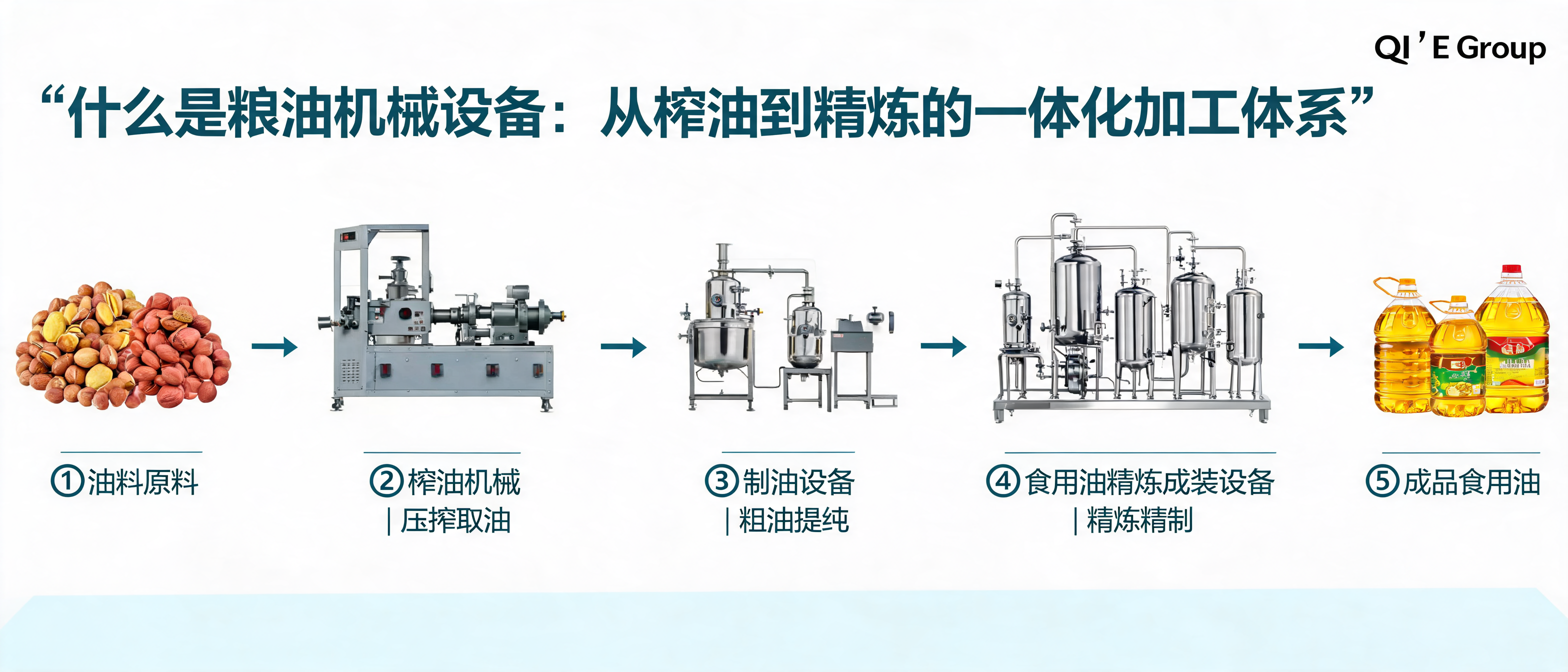
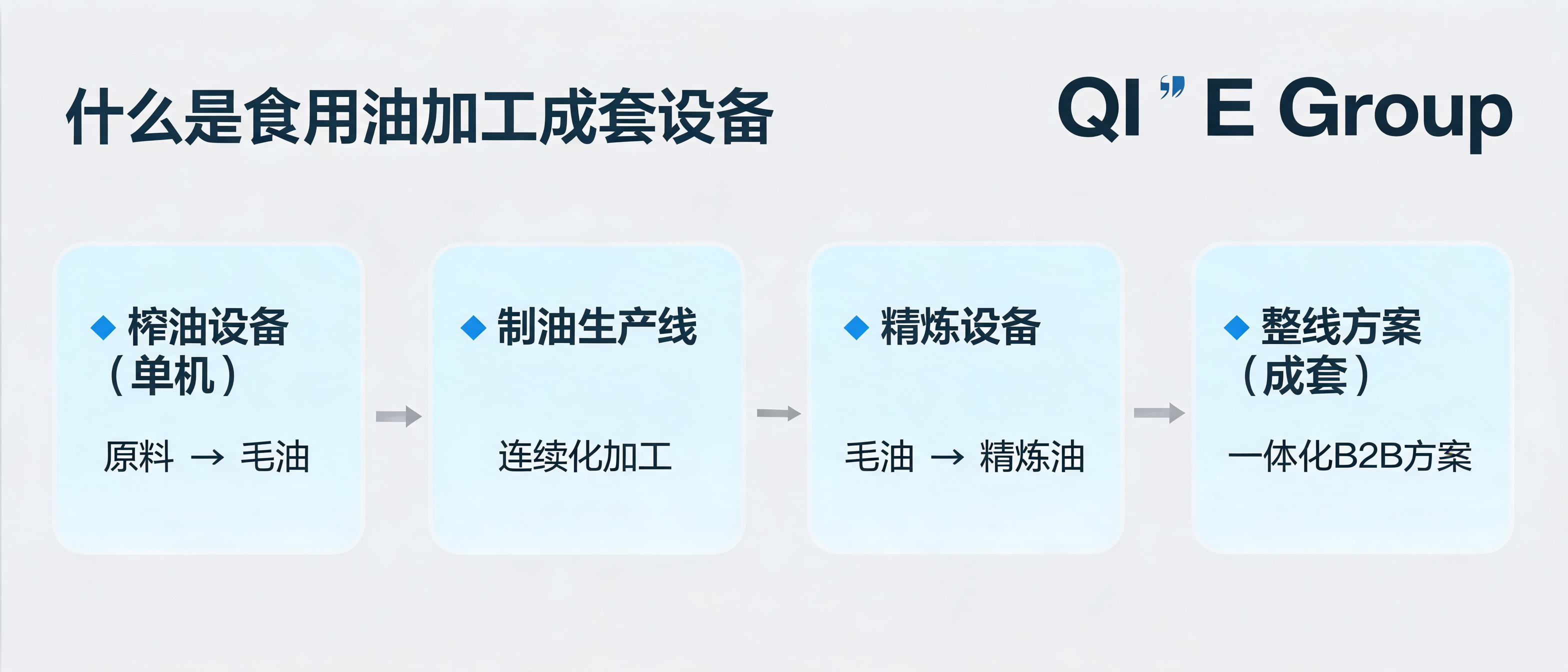
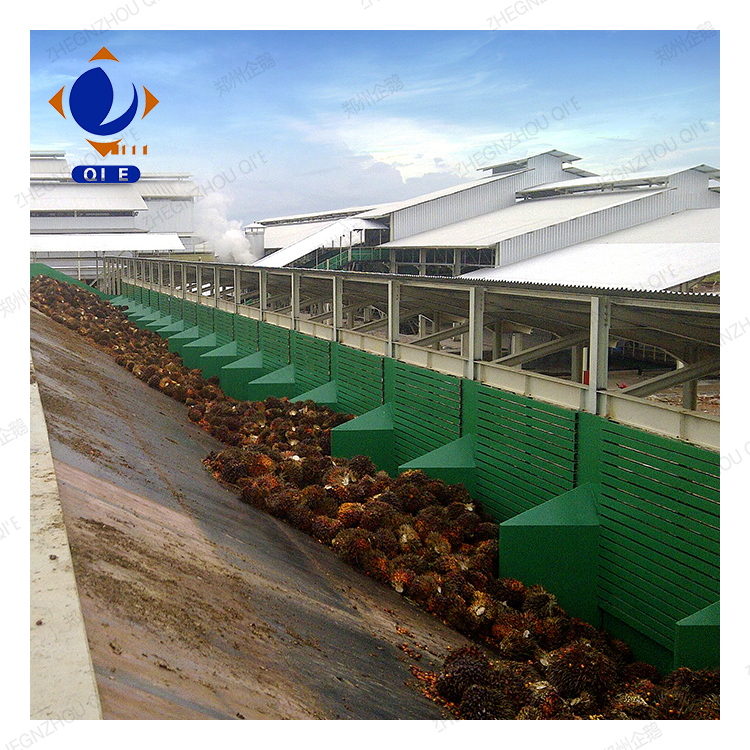
Edible oil processing projects are increasingly evaluated as connected production systems rather than as a collection of individual machines. For B2B processors, the selection of oil pressing, extraction, refining and auxiliary equipment now involves production continuity, operating efficiency, environmental management, product consistency and service accessibility.
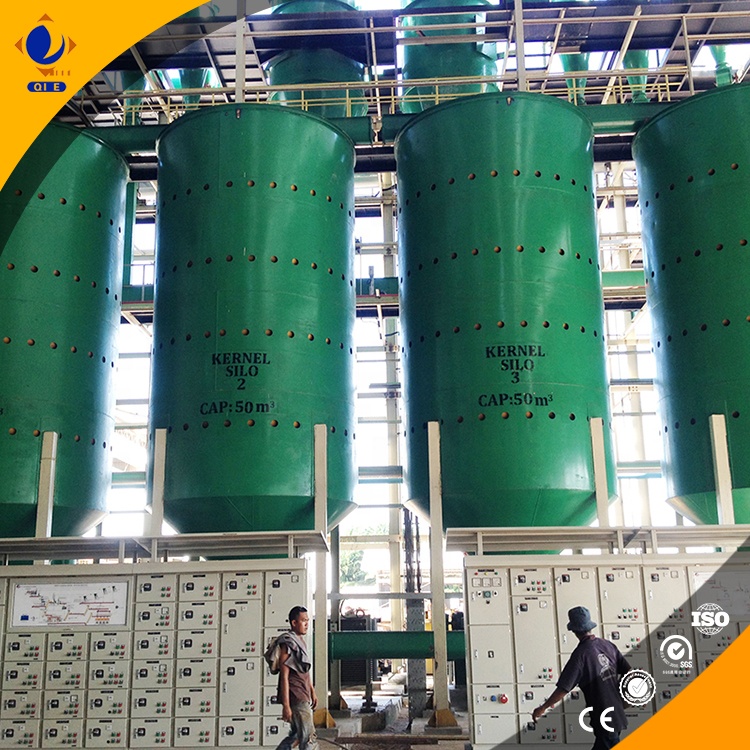
Qi'e Grain and Oil Machinery Co., Ltd. follows these developments in the grain and oil machinery sector and provides equipment and integrated oil mill solutions for processing facilities in Asia, Africa and South America. The practical direction is clear: build production lines that are easier to operate, more coordinated across process stages and better suited to long-term plant management.
Automation in edible oil processing is not limited to adding automatic controls to a single oil press. It increasingly means connecting material handling, pressing or extraction, filtration, refining and downstream transfer through coordinated operating logic. A well-planned automated oil production line can help operators manage process transitions more consistently and support clearer control over routine production activities.
Automation should be matched to the process route, raw material characteristics, production capacity and the operating capability of the facility—not treated as a standalone feature.
Energy-efficient oil processing equipment is increasingly important because energy use is connected to multiple stages of an edible oil plant. Mechanical conveying, heating, pressing, extraction, separation and refining all require thoughtful process design. The relevant question for project planning is not simply whether one machine consumes less energy, but how the full line is configured and operated.
A plant-level approach considers equipment matching, material flow, process stability and maintenance access. Selecting appropriately configured equipment can help avoid unnecessary process interruptions and support more efficient day-to-day operation. For processors evaluating new facilities or upgrades, energy efficiency should therefore be reviewed together with capacity targets, utility conditions and the intended oil processing method.
An integrated oil mill solution brings individual equipment functions into a coherent production plan. Depending on the selected process and oil-bearing material, the scope may include oil pressing equipment, oil production line equipment, edible oil refining equipment and supporting systems for material movement and process connection.
| Processing Area | Planning Focus | Why Integration Matters |
|---|---|---|
| Oil pressing | Raw material suitability, throughput and process connection | Supports a stable link between preparation, pressing and subsequent treatment. |
| Oil extraction | Extraction route, auxiliary systems and operating controls | Helps align extraction equipment with the broader production line. |
| Oil refining | Refining process requirements and product quality objectives | Connects crude oil treatment with the required finished oil process. |
| Plant support | Layout, installation coordination and technical service | Improves the practical connection between equipment delivery and plant operation. |
Environmental considerations are becoming more closely linked to equipment and process decisions. In edible oil processing, this can involve attention to resource use, process containment, equipment configuration and orderly production management. The appropriate solution depends on the production route, local operating conditions and the facility’s applicable requirements.
For project owners, environmental performance is best considered early in the planning stage. Reviewing process interfaces and supporting equipment before installation can help create a more coordinated facility design than addressing individual issues after the line has been commissioned.
Edible oil quality is influenced by the entire processing route, from raw material handling to pressing, extraction and refining. Equipment selection should support the process conditions required by the intended product, while the plant layout should enable practical operation, inspection and maintenance. Consistency is strengthened when equipment interfaces are clear and each stage is designed with the next stage in mind.
For international oil processing projects, equipment is only one part of the implementation process. Design communication, installation coordination and technical support are important considerations, particularly when site conditions, raw materials and operator practices vary across markets.
Qi'e Grain and Oil Machinery Co., Ltd. approaches oil mill projects with a focus on equipment supply together with design, installation and technical service support. This integrated approach helps B2B buyers evaluate the relationship between equipment configuration and real operating needs instead of considering machines in isolation.
The direction of edible oil processing equipment is toward greater automation, stronger production-line integration, more considered energy use and more complete technical support. These trends are shaping how processors evaluate both new oil mill investments and upgrades to existing operations.
From automatic oil press machines and vegetable oil solvent extraction equipment to edible oil refining systems, Qi'e Grain and Oil Machinery Co., Ltd. supports customers seeking appropriately configured solutions for their oil processing projects. The goal is a production line designed around process needs, operational practicality and long-term cooperation.

 363
|
363
|
 screw oil press selection guide
oil press machine for different raw materials
oil processing equipment maintenance
how to choose screw oil press
oil press fault troubleshooting
screw oil press selection guide
oil press machine for different raw materials
oil processing equipment maintenance
how to choose screw oil press
oil press fault troubleshooting
 72
|
palm oil processing equipment selection
automatic palm oil production line
palm fruit pressing machine energy consumption
high oil yield low energy palm oil mill
ISO9001 CE palm oil processing equipment
72
|
palm oil processing equipment selection
automatic palm oil production line
palm fruit pressing machine energy consumption
high oil yield low energy palm oil mill
ISO9001 CE palm oil processing equipment
 124
|
palm
oil
production
line
troubleshooting
motor
overload
solutions
PLC
control
system
debugging
equipment
maintenance
124
|
palm
oil
production
line
troubleshooting
motor
overload
solutions
PLC
control
system
debugging
equipment
maintenance
 325
|
Qi'e Grain and Oil Machinery Co., Ltd.
edible oil processing line design
oil press equipment configuration
solvent extraction equipment
edible oil refining equipment
325
|
Qi'e Grain and Oil Machinery Co., Ltd.
edible oil processing line design
oil press equipment configuration
solvent extraction equipment
edible oil refining equipment
 289
|
palm oil production line troubleshooting
motor overload causes
motor overload quick inspection
PLC control system debugging
pressure fluctuation management
289
|
palm oil production line troubleshooting
motor overload causes
motor overload quick inspection
PLC control system debugging
pressure fluctuation management