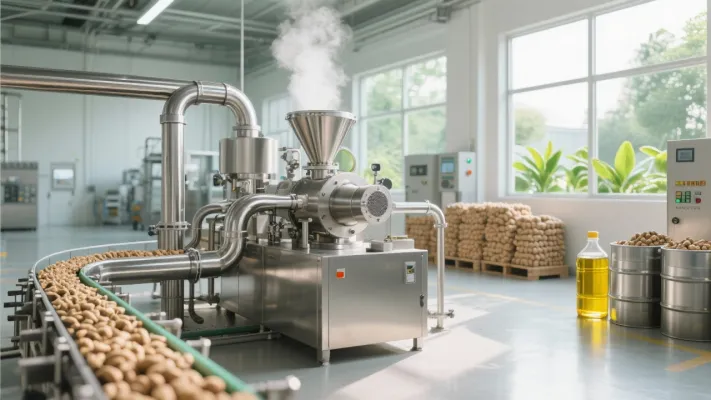
Choosing between cold press and hot press technology in palm oil extraction is more than a technical choice—it’s a strategic one that impacts energy costs, product quality, and long-term profitability. For plant managers, procurement officers, and operations leaders in Southeast Asia, Africa, and beyond, understanding the real-world differences can mean the difference between a competitive edge and operational inefficiency.
Cold pressing operates below 45°C, preserving natural enzymes and antioxidants like tocopherols. In contrast, hot pressing typically runs at 70–90°C, which accelerates oil release but degrades heat-sensitive nutrients. This fundamental difference affects not only yield but also market positioning—cold-pressed oil commands premium pricing in health-conscious markets such as Europe and North America.
| Parameter | Cold Press | Hot Press |
|---|---|---|
| Avg. Energy Consumption (kWh/ton) | 18–22 | 28–35 |
| Steam Usage (kg/ton) | 0 | 150–200 |
| Oil Yield (%) | 68–72% | 75–80% |
| Tocopherol Retention | High (>85%) | Low (<50%) |
While both systems use screw presses and centrifuges, cold press requires precision temperature control units and slower feed rates to prevent thermal degradation. Hot press setups often integrate steam-heated pre-treatment tanks and automated moisture sensors—an added layer of complexity but one that boosts throughput. According to a 2023 study by the International Journal of Food Engineering, well-integrated automation in hot press lines reduces labor costs by up to 22% over three years.
In Malaysia, where humidity exceeds 80%, cold press systems perform better due to lower moisture volatility. Meanwhile, in Nigeria, where raw fruit bunches are drier, hot press delivers higher output with less downtime. These regional nuances underscore why a “one-size-fits-all” approach rarely works—even within the same industry.
Think of it this way: Cold press is like making artisanal olive oil—you invest more upfront but gain premium branding power. Hot press is akin to mass production: efficient, scalable, and cost-effective—but with fewer differentiators.
Pro Tip: If your goal is to export to EU or US markets, prioritize cold press even if initial investment is 15–20% higher—it pays off in certifications, shelf life, and customer trust.
Whether you're scaling a new mill or optimizing an existing facility, the right process choice hinges on clear goals—not just specs. Use this data-driven framework to align your equipment strategy with your business objectives.
Download Our Free White Paper: "Choosing the Right Palm Oil Press for Your Market"