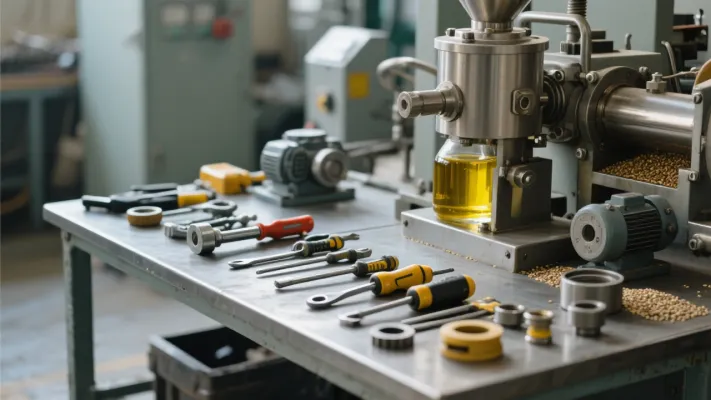
You know the drill—when your palm oil press runs smoothly, production flows and profits rise. But when gears seize or seals leak, downtime hits hard. In fact, 72% of unplanned stops in oilseed processing are preventable through structured maintenance (Source: Food Engineering, 2023). This isn’t just theory—it’s what separates top-tier producers from those constantly reacting to breakdowns.
| Component | Maintenance Interval | Recommended Action |
|---|---|---|
| Gearboxes | Every 3 months | Oil analysis + replace if viscosity exceeds 10 cSt above baseline |
| Bearings | Every 6 months | Grease with ISO VG 150 at 10–15% of cavity volume |
| Pump Units | Monthly visual check | Check for cavitation signs — pressure drops >5% indicate wear |
Consistent lubrication isn't optional—it's foundational. For example, using incorrect grease can reduce bearing life by up to 60%. Always refer to OEM specs and use ISO-compliant oils tailored to operating temperatures.
“Water quality is often overlooked—but it’s the silent killer of pumps and valves.” — Dr. Linh Nguyen, Senior Process Engineer, ASEAN AgriTech Group
Hard water leads to scale buildup—especially in heat exchangers and hydraulic systems. A study by the International Olive Council found that untreated feedwater increases corrosion rates by 3x over 12 months. Here’s how to stay ahead:
Replace seals proactively every 12–18 months—or sooner if you see minor drips. Use a torque wrench set to manufacturer specs (typically 15–25 Nm) to avoid over-tightening. One wrong turn can cause premature failure.
If vibration spikes or pressure drops occur suddenly, follow this quick diagnostic flow:
Pro Tip: Keep a logbook—not just for compliance, but for pattern recognition. Operators who track temperature, pressure, and noise trends spot issues 3x faster than those relying on reactive fixes.