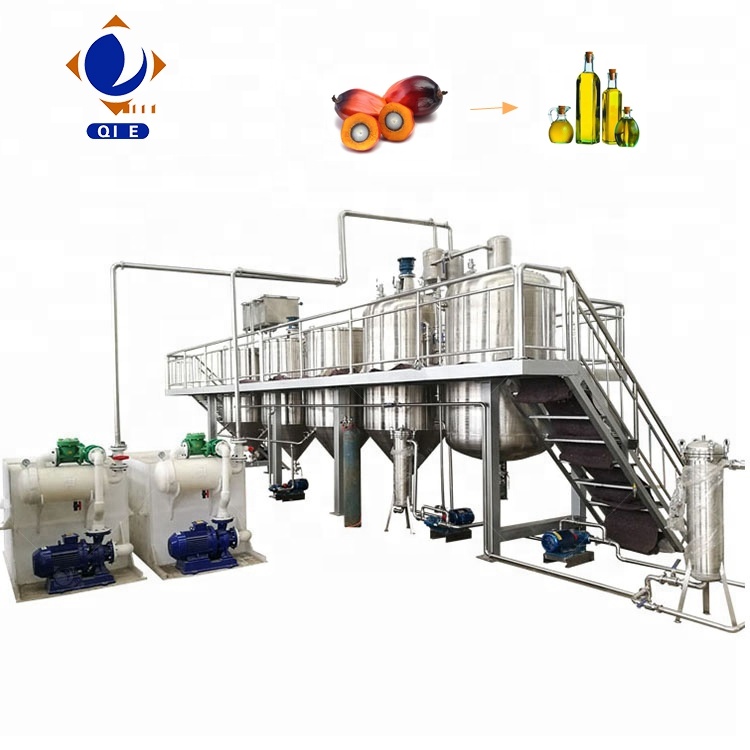
Palm oil is one of the most widely used vegetable oils in the world, known for its versatility and economic value. The refining process of palm oil is crucial to ensure its quality and meet market requirements. This article will delve into the core steps of the palm oil refining process - degumming and deacidification, and provide in - depth guidance on technical parameter control.
In the degumming process, temperature, vacuum degree, and additive dosage are the key factors affecting the quality of the final product. Generally, the ideal temperature for degumming is between 60 - 70°C. At this temperature range, the gums in the crude palm oil can be effectively separated. The vacuum degree should be maintained at around 20 - 30 mbar to prevent oxidation during the process. The dosage of phosphoric acid, a common additive in degumming, is usually about 0.1 - 0.2% of the oil weight. Precise control of these parameters can ensure that the refined palm oil has a stable color and meets the standard of free fatty acids.
During deacidification, the temperature is typically set at 100 - 110°C, and the vacuum degree is maintained at 5 - 10 mbar. The amount of sodium hydroxide used for neutralizing free fatty acids should be accurately calculated according to the acid value of the crude oil, usually around 1 - 2% of the oil weight. These parameter settings are essential for reducing the acid value of the oil and improving its quality.
In actual production, several quality problems may occur, such as abnormal color (usually darker) and exceeding the standard of acid value. A darker color may be caused by over - heating during the refining process or the presence of metal contaminants. If the acid value is too high, it may be due to insufficient deacidification or improper control of the additive dosage.
To troubleshoot these problems, on - site diagnosis is necessary. For color issues, check the temperature control system and the quality of the equipment. If metal contamination is suspected, the use of stainless - steel equipment can be considered. When dealing with high acid values, review the deacidification process parameters and adjust the additive dosage accordingly.
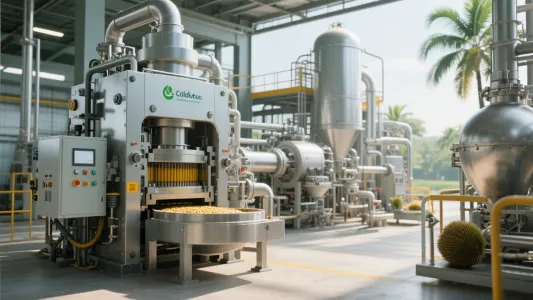
Penguin Group's fully automatic production line uses 304 stainless - steel materials and an intelligent control system. The 304 stainless - steel material can effectively prevent metal contamination during the refining process, ensuring the purity of the final product. The intelligent control system, with its high - precision temperature control and automatic feeding system, can significantly reduce human errors. For example, it can accurately control the dosage of additives within an error range of less than ±0.05%, which helps customers achieve continuous and stable production.
Based on years of industrial practice, a set of standard operating procedures can be established. This includes pre - production equipment inspection, strict parameter setting during the refining process, and post - production quality testing. By following these procedures, users can build a replicable and easy - to - execute production management system, improving production efficiency and product quality.
In conclusion, the palm oil refining process requires strict control of degumming and deacidification parameters. With the help of advanced equipment like Penguin Group's fully automatic production line and standardized operating procedures, users can achieve high - quality and stable palm oil production. Are you ready to upgrade your palm oil refining process? Explore Penguin Group's fully automatic production line and take your palm oil production to the next level!
 125
|
125
|
 palm oil cold press process
palm oil hot press method
palm oil extraction energy consumption
palm oil processing efficiency
palm oil production technology
palm oil cold press process
palm oil hot press method
palm oil extraction energy consumption
palm oil processing efficiency
palm oil production technology
 239
|
Small Palm Oil Pressing Equipment
Palm Oil Pressing and Refining Equipment
Palm Oil Processing Machine
Automatic Palm Oil Pressing Equipment
High-efficiency Palm Oil Refining Equipment
Advanced Palm Oil Processing Equipment
PLC Controlled Palm Oil Equipment
Quality Palm Oil Extraction Systems
Durable Palm Oil Production Machinery
Small Scale Palm Oil Processing Solutions
239
|
Small Palm Oil Pressing Equipment
Palm Oil Pressing and Refining Equipment
Palm Oil Processing Machine
Automatic Palm Oil Pressing Equipment
High-efficiency Palm Oil Refining Equipment
Advanced Palm Oil Processing Equipment
PLC Controlled Palm Oil Equipment
Quality Palm Oil Extraction Systems
Durable Palm Oil Production Machinery
Small Scale Palm Oil Processing Solutions
 396
|
mini palm oil refinery machine Nigeria
fully automated palm oil processing equipment
enhance palm oil quality and production efficiency
396
|
mini palm oil refinery machine Nigeria
fully automated palm oil processing equipment
enhance palm oil quality and production efficiency
 310
|
Palm oil processing equipment
Methods to improve palm oil pressing efficiency
Energy - saving renovation schemes for refining processes
Application of automated control systems
Equipment daily maintenance skills
310
|
Palm oil processing equipment
Methods to improve palm oil pressing efficiency
Energy - saving renovation schemes for refining processes
Application of automated control systems
Equipment daily maintenance skills
 46
|
compact palm oil production line equipment
efficient eco-friendly oil press equipment
customized palm oil processing equipment
46
|
compact palm oil production line equipment
efficient eco-friendly oil press equipment
customized palm oil processing equipment